Don’t Predict the Future… Create It With ESSEC’s EMAI
Many of us are already using artificial intelligence (AI) in our daily lives, but do we truly understand it? From its limitations and ethical implications to its strategic use, today’s leaders are struggling to keep pace with the AI revolution.
With this in mind, one of Europe’s leading business schools has designed a master’s program that immerses students in every aspect of AI. ESSEC Business School’s new Executive Master in Artificial Intelligence (EMAI) has been designed to give professionals everything they need to lead in the age of AI.
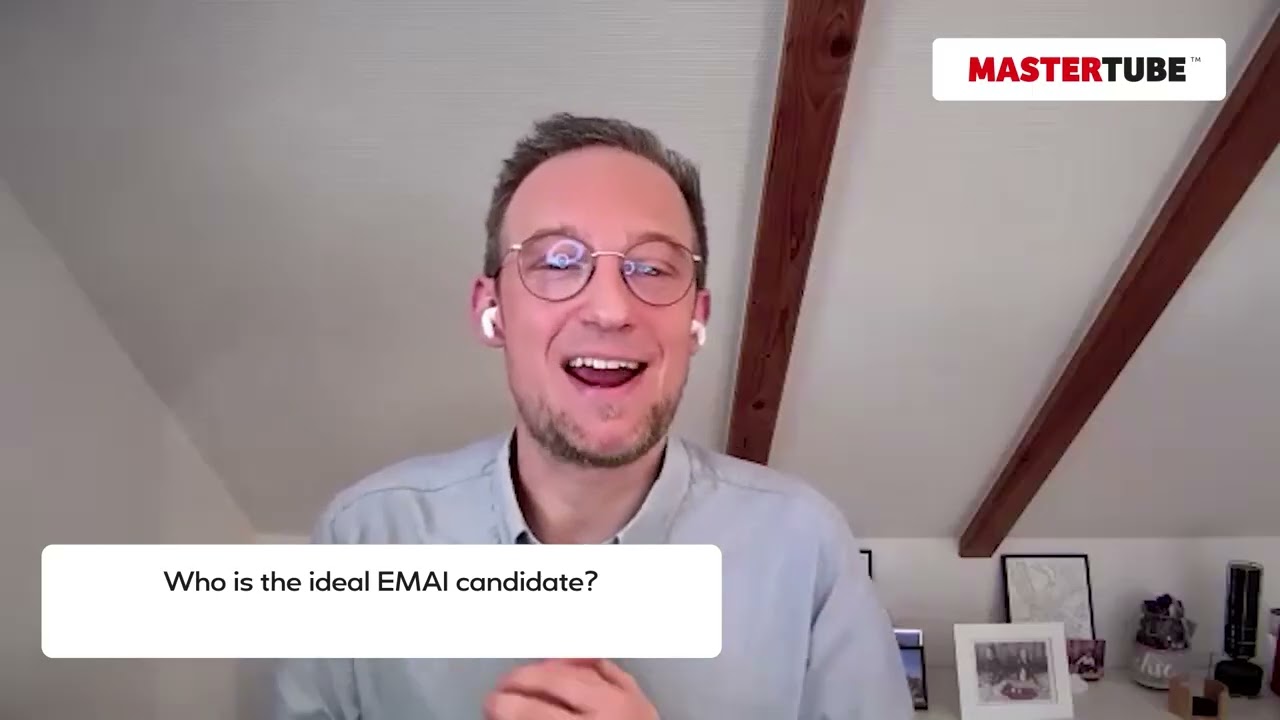
Thomas Huber, the Academic Director of the EMAI, believes AI expertise goes beyond the technical aspect. He explains why today’s leaders need a comprehensive grasp of the technology that is changing the world we live in.
Mastering the Art of AI With ESSEC Online
Founded in 1907, ESSEC holds the coveted Triple-Crown accreditation from EQUIS, AACSB, and AMBA. This places it inside the top 1% of business schools worldwide. ESSEC’s online programs provide the elite education fitting of an academic powerhouse, together with the flexibility needed for the modern digital age.
Thomas believes that leaders want to use AI to drive change. They just lack the knowledge and expertise.
“We are already in a moment where AI is changing how decisions are made in organizations, how work is coordinated, how value is created, and how every one of us is working,” says Thomas. “Many leaders feel real pressure to do something with AI, and they lack a structured way of thinking about it.” (01:58)
The EMAI program provides this structure. It bridges the gap between technical expertise and strategic management, equipping leaders to make a genuine impact within their roles.
The New Need For AI Education
ESSEC Online already has a track record of teaching leaders to navigate the evolving digital landscape with its Executive Master in Digital Transformation (EMDT). While the EMDT was designed with a broad digital transformation scope in mind, the new EMAI looks at things through a more specialized lens.
“Over the last couple of years, what we have observed is that there is a different and more specific need that is currently emerging,” says Thomas. “We have professionals whose day-to-day job is already revolving around AI.” (01:04)
The program targets three profiles. First, the AI product and operations leader. These are the professionals who control the lifecycle of AI, from building tools to compliance. Roles include chief AI officers, machine learning engineers, and data managers.
The program also targets leaders who redesign work with AI. These are transformation or service leaders who need to rebuild the way work is carried out within their specific domain. Finally, the EMAI master’s program attracts AI entrepreneurs and founders whose goal is to build a business around AI.
Laying the Strategic Foundations For AI
Instead of simply considering which tasks can be automated, today’s leaders need to give deep consideration to how AI can create value for their company. In the age of AI, deliberate investment decisions drive companies forward. These decisions involve building the organizational and structural capabilities to capture the full potential of AI.
“It’s not just about technology. It’s about designing your organizational structures and your processes to be ready for the age of data,” explains Thomas. “I think this is a different mindset when you have this strategic foundation that will inform your thinking and decision-making. (04:28)
As Thomas is keen to highlight, the program teaches these candidates to think of AI as a strategic asset. Specifically, an asset that can become central to the evolution of an organization.
A Holistic View of the Rise of AI
Specialized artificial intelligence modules are a key part of the EMAI master’s. There are four in total, each of which provides a blend of technical instruction and strategic insight.
For Thomas, the ‘AI Impacts Across All Levels’ module is perhaps the one that most surprises participants.
“In contrast to most AI programs on the market, [which] focus either on the technical side or purely on the business side, this module looks at what AI does to society, the economy, to organizations, but also to work itself,” he says. (05:02)
The other three modules are:
- Managing AI: The lifecycle of AI products, from training and operation to scaling.
- AI for Business: Data network effects and harnessing AI for entrepreneurship.
- Digital Innovation & Entrepreneurship: Machine learning, data structures, and AI regulation.
Showcasing Your Expertise in AI With An Applied Thesis
The ESSEC EMAI program culminates with the compulsory professional thesis. Students focus on an AI-based challenge within their organization, drawing on expert support from the ESSEC academic team.
While a professional thesis is typically seen as a theoretical exercise, Thomas has a different take.
“I personally think of it more as a means that allows you to demonstrate real expertise on a specific and highly focused problem,” he says. “The professional thesis requires deep engagement with a concrete, real-world AI challenge. I always say this challenge needs to be directly relevant to our participants’ careers.” (06:37)
As Thomas points out, the thesis changes the nature of how professionals lead. It allows them to make a lasting impact within their organization.
“They are also building a reputation for themself as someone who has done really serious work on a real-world AI problem,” he adds. (07:50)
Ultimately, the professional thesis is an opportunity to apply everything learned during the master’s program to deliver tangible outcomes.
Three Essential Skills and Urgent Existential Questions
Thomas believes employers are looking for three core competencies that the ESSEC Online program delivers.
AI Literacy
“The first is AI literacy,” he says. “Our participants will be able to evaluate AI claims critically, translate between technical and business teams, and ultimately make better decisions.” (12:10)
Operational AI Implementation
The second is the ability to operationalize AI. The program teaches students how to define AI success metrics, manage data, and model risks.
Credible Expertise
Besides these skills and abilities, the ESSEC EMAI also provides students with credibility and a robust network.
“This is a degree from a prestigious institution,” says Thomas. “… I think this is something that any employer will immediately notice.” (12:56)
At its core, the ESSEC EMAI approaches AI as far more than just a technical challenge.
“It’s not just about how we deploy AI faster or other operational questions,” Thomas explains. “You really need to seriously ask how we can deploy AI in ways that are not only effective and efficient, but also compliant, safe, and aligned with wider values, because there’s real risk with such powerful technologies.” (14:02)
Responsible leadership in the realm of AI is needed. Those who are positive, curious, and determined to steer the wheel towards an ethical and bright future. Are you one of these leaders?
Want to study at ESSEC Business School? Take our eligibility quiz to see if you qualify!