The Rise of the Solopreneur: The Job Trend Reshaping Careers in the Age of AI
Written by:
Paula Werdnik
Published on: October 23, 2026
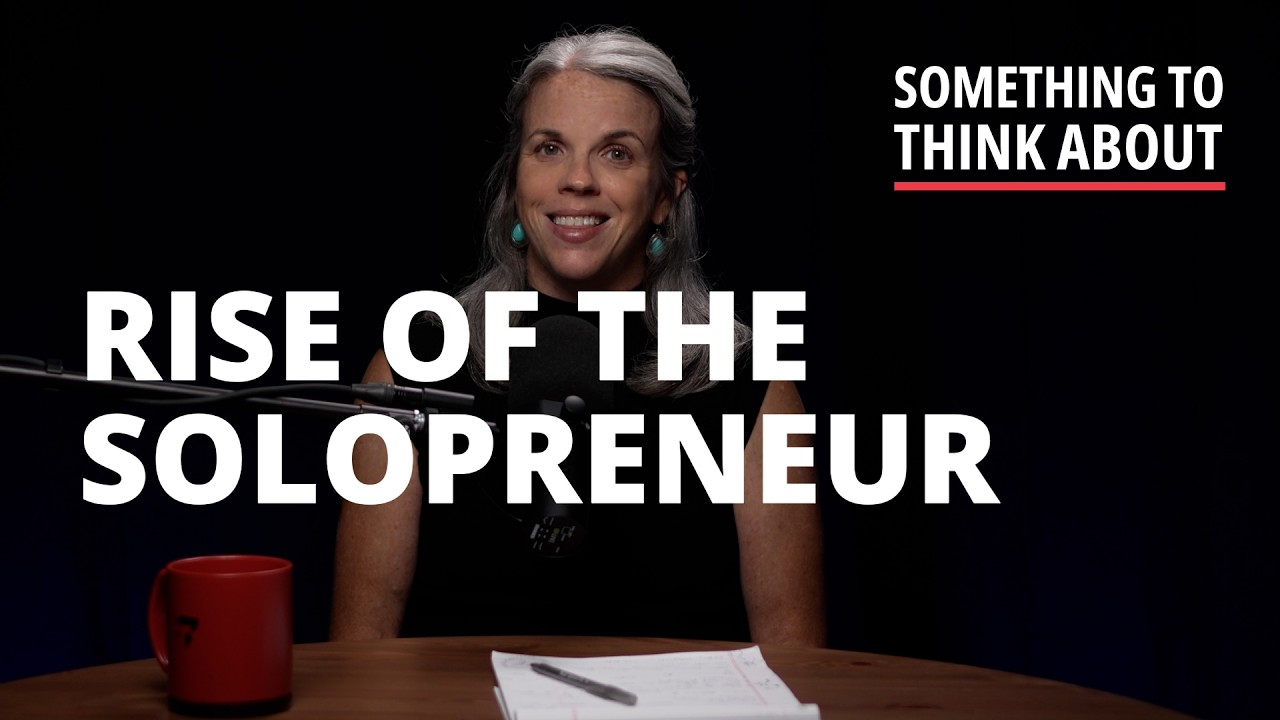
The rise of the solopreneur is rewriting the rules of work. Featuring a Tepperspectives video podcast from Carnegie Mellon’s Tepper School of Business, we define solopreneurship and unpack the upsides, the hidden risks, and who is truly built for a team of one in the AI era.
Spotlighting A Growing Career Trend: The Rise of the Solopreneur
Imagine running a thriving company with no employees. Teams of AI agents handle the work. You orchestrate the strategy and make the final decisions. That is the promise of the modern solopreneur. And it is rapidly reshaping how people found and run companies.
Drawing on this video, this article will further explore what a solopreneur is and how solopreneurship is changing the nature of work in the current and future job market.
What Is a Solopreneur?
In a nutshell, a solopreneur is someone who has set up a business and is its only employee. This means that a solopreneur is both the “boss” and the task force of that company. They handle all of the tasks involved in running a business. Solopreneurs can partner with others, but they don’t have full-time employees within their company.
Emily succinctly explains, “Historically, a solopreneur was someone who started their own business but didn’t hire anyone else.” (00:27)
So how does this differ from more commonly known terms like “entrepreneur”? Entrepreneurs are also founders of companies or businesses; however, many hire employees as they scale. For entrepreneurs, expansion is a major indicator of business success. Entrepreneurs focus on building teams, pursuing scaling and growth, and an exit strategy to one day sell their business. Entrepreneurs often measure success by revenue, number of employees, and market share.
For many solopreneurs, the core goal is independence. And a mission- or identity-driven business. The aim is to pursue a commercially viable personal passion or interest. Moreover, a major advantage of solopreneurship is the flexibility and total creative freedom of being a one-person business.
Let’s take a closer look at what defines a solopreneur in the modern workforce.
Solopreneur vs. Entrepreneur vs. Freelancer: What’s the Difference?
Below is a table outlining the basic similarities and differences of career paths such as entrepreneurs, solopreneurs, and freelancers.
Entrepreneur
Solopreneur
Freelancer
Team
Often hires employees
Works alone
Works alone
Typical work
Builds a company or product
Runs a one-person business
Sells services to multiple clients
Risk
Often needs investment from investors
Lower overhead costs as they do not pay employees
Income varies depending on client volume and number of projects
While they are similar, there are some distinct differences in these various career paths of solo work.
How Is AI-Powered Solopreneurship Changing the Way We Work?
With the rise of artificial intelligence (AI), the role of the solopreneur is expanding. Emily uses the example of Ben Broca as a case study. The 40-year-old solopreneur started a company that gained 10,000 customers in six months. It is on track to generate $10 million in revenue.
In Broca’s case, he used AI agents and bots instead of hiring a team of employees. Thus, he was able to remain a one-person business despite scaling his business rapidly.
Emily highlights, “AI is creating a new kind of solopreneur: the founder who scales rapidly and oversees work well beyond what just one person could do by building teams of AI agents, not human employees.” (00:36)
According to Carta data from 2025, just under a third of newly formed startups are led by solo founders. That’s nearly double the rate from 2015, due to the availability and effectiveness of AI tools. CEO of OpenAI, Sam Altman, famously believes the first US$1 billion solo startup will be built by one person with an army of AI agents and a laptop. Dario Amodei, CEO of Anthropic, says we might witness this as soon as 2026.
According to Zoom, solopreneurship is no longer a trend but a formidable economic force. In the United States, solopreneurs contribute approximately US$1.7 trillion to the economy, about 7% of the U.S.’s total economic activity. Solopreneurs are not on the margins, but a rapidly growing part of the business landscape. Solopreneur job roles include consultants, designers, strategists, developers, coaches, and creators.
Is Going Solo Worth It? The Upside of a Team of One
There are various advantages to AI-powered solopreneurship. For instance, accessibility. Emily explains, “One of the biggest obstacles to a person starting their own business has been resources. You need money to hire people and the leadership know-how to build successful teams. AI changes that equation by dramatically lowering the cost of starting a company.” (00:56)
Previously, you would need people with various expertise to run a company. Now, AI agents can complete tasks such as:
Write software
Design a website
Create marketing campaigns
Analyze customer data
Draft contracts
Answer support emails
Automate routine business processes
The Less Tangible Benefits: Flexibility, Being Your Own Boss, and Creative Expression
Beyond the monetary advantages, there are also less tangible benefits. Zoom’s recent report titled “The Rise of the Solopreneur” reports that factors such as creative expression and self-actualization are major draws for this career path as compared to more traditional job roles.
This is not limited to solopreneurs alone, but includes entrepreneurs as well. Emily notes, “Historically, research has shown that entrepreneurs find their work more personally meaningful because it allows them to prioritize their values and their sense of purpose.” (01:53)
AI-driven solopreneurship allows workers to exit a tough job market, pursue meaningful work, and avoid tasks and responsibilities that they do not enjoy, such as managing other people. (02:02)
Census Bureau data shows around 29.8 million solopreneurs in the U.S., and that number will likely grow in coming years. AI tools make one-person businesses more accessible and commercially viable for more people.
Forbes states that for many, the appeal of solopreneurship involves low financial risk (as you do not have to pay a team of employees), flexibility (as you manage your own schedule), and greater financial independence (your earnings are not dependent on corporate timelines).
Not All That Glitters Is Gold: The Downsides of One-Person Companies
Nothing is ever perfect. Despite the many advantages of solopreneurship, there are also downsides. For one, solopreneurs need a financial safety net to start their own business. Solopreneurs need to consider financial viability and resources before starting their journey.
Moreover, being a one-person company is strenuous. It requires handling all business tasks, including marketing, sales, finance, and strategy. This can lead to burnout. Emily points out, “[It] risks burnout since founders don’t have any human colleagues to whom they can delegate higher-order problem-solving.” (02:46)
Solopreneurship has pros and cons. On the less glamorous side, it means taking full responsibility, even when things go wrong, no paid time off or employee benefits, and being a jack of all trades, including all administrative tasks. Not being part of a team can also feel isolating to some.
AI-Powered Solopreneurship Is Changing The Job Market
Solopreneurship is changing the economy and job market. Emily spotlights the potential systemic downsides. She says, “We all recognize that entrepreneurs create innovative new products and services, but they’ve also historically been job creators.” (02:59)
Startups are critical for job creation. She adds, “The rise of solopreneurship seems unlikely to stifle innovation, but very likely to stifle the kind of job growth that new ventures have created in the past.” (03:26)
Moreover, solopreneurship could reduce opportunities for on-the-job learning. Typically, growing companies gave employees mentorship and experience. This helped to develop the next generation of entrepreneurs.
Emily poses challenging questions about the future of work. She asks, “If tomorrow’s most successful companies employ only one, maybe two people, where will the next generation of workers gain experience? If startups are no longer these engines of job growth, what new pathways will people follow into meaningful careers? And if AI allows entrepreneurs to build highly valuable companies without creating jobs, should we maybe rethink what we expect entrepreneurship to contribute to society?” (04:51)
While only time will tell, one thing is certain: the nature of entrepreneurship and work is changing rapidly, influenced by the growth of AI and changing employee expectations.
Is Solopreneurship Right for You? New Career Paths in Today’s Job Market
The upsides are compelling: freedom over your time and income, full creative expression, and a lower startup cost as you do not need to finance an entire team. However, the downsides are real, too. Potential burnout, isolation, and no employee benefits.
Ultimately, solopreneurship is ideal for independent people who crave autonomy and enjoy working alone. They must have a clear passion, idea, or skill to monetize. Furthermore, solopreneurs need to be adaptable, resilient, self-motivated, curious to keep learning, and disciplined with their time.
The path of solopreneurship is still taking shape, as it is a relatively new career path. However, it is undeniable that it will change how we do business and the career paths available to us.
Building an Entrepreneurial Edge at the Tepper School
Does solopreneurship sound like something for you, but you don’t know where to start? Sometimes a master’s program can bridge the gap between where you are and your dream career path.
For instance, the MS in Management Program at Tepper School of Business helps you turn your undergrad degree into a business career within nine short months. The program has a strong focus on experiential learning and practical application. Hone your business leadership and teamwork skills through a STEM-driven program. The best part? You don’t need a business background or extensive work experience to apply. With the right support at the Tepper School, launching your business career has never felt more within your grasp.
Learn more about Tepper School of Business at Carnegie Mellon University through its Tepperspectives series. Their Tepperspectives series pairs expert insight with accessible articles, videos, and podcasts on the industry trends reshaping business. Its YouTube channel, TepperCMU, brings those ideas straight to your screen.