Introduction to supply chain management

Supply chain management (SCM) is a crucial aspect of modern business operations. It encompasses the planning, coordination, and execution of activities to deliver products and services to customers. Managing supply chains has become increasingly complex and dynamic in an era of globalization and rapidly changing technology. Specialized skills and knowledge are required to ensure deliveries are made in a timely and efficient manner.

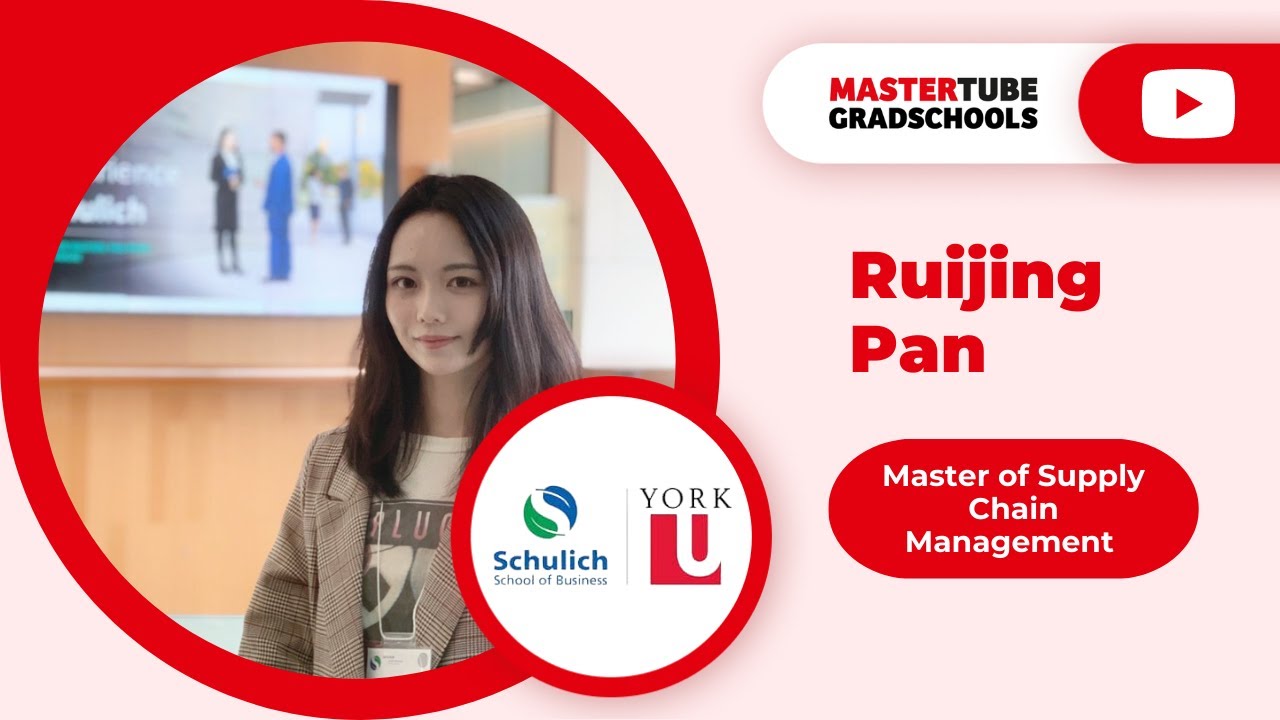
As Ruijing Pan, a student in the Master of Supply Chain Management (MSCM) program at York University’s Schulich School of Business, explains, “How we can deliver the right product at the right place, and at the right price is always the topic that supply chain talent focuses on solving.”(01:57) Ruijin speaks from real-world experience. Besides her master’s program, she also has a part-time job in the supply chain field.

Navigating the rapid changes in SCM

So what exactly is supply chain management? In simple terms, it involves overseeing the entire process of how goods and services are produced and delivered. That includes everything from sourcing raw materials to getting the final product to the customer’s hands. The goal of supply chain management is to optimize efficiency and minimize costs while ensuring customer satisfaction. 

The COVID-19 pandemic brought into sharp focus the critical role that SCM plays in our daily lives. Almost overnight, consumption patterns changed, and there was a surge in demand for home office equipment, cleaning products, and staple products like toilet paper. The shift in demand, coupled with lockdowns and travel restrictions, caused global shortages. The pressure was on supply chain talent to quickly adapt to meet customer demand. In the post-pandemic era, it is evident that changes have occurred in the field of e-commerce, information technology, and supply chain logistics. 

Ruijing already had several years of experience before starting her master’s degree. However, the pandemic showed her the benefits of increasing her academic credentials. (00:36)

According to Ruijing, the supply chain field is still changing. She believes continuous education is crucial to keep up. “The world is constantly changing, if you do not learn, you will fall behind,” she says. (02:19)

A career in SCM requires a combination of technical knowledge and soft skills, including problem-solving, communication, and working effectively in a team. SCM professionals must be able to think strategically and have a solid understanding of the broader economic context in which they operate.

Studying MSCM at Schulich

Originally from China, Ruijing completed a Bachelor of Business Administration in Canada, so she was familiar with the academic landscape. When asked why she chose the Schulich program, she says, “Schulich is the number one Canadian business school. They have outstanding professionals who can provide the best resources and networks to help my career.” (00:54)

The Schulich School of Business is known not only for its exceptional faculty but also for its diverse student body. Ruijing adds that it’s broadened her perspective to meet students from different backgrounds in the diverse communities at Schulich. (01:04) With international students from 56 countries, including India, Pakistan, and Nigeria,  the school makes an effort to make them feel welcome with resources like festivals and student clubs. (02:35)

By completing the MSCM program at Schulich, Ruijing is well-positioned to reach her goal of finding a senior SCM role in a pharmaceutical company. The school’s location in Toronto, the capital city of Ontario, reflects the on-campus environment. The city is one of the most diverse in the world. According to the 2021 census data, over 55% of the city’s population belongs to a visible minority group. Additionally, Toronto is an economic hub housing a number of global pharmaceutical companies like Johnson & Johnson, Sanofi, and Bayer. 

As a bonus, the downtown business offices can provide inspiring scenery for post-class walks.

Advice for future SCM professionals

For those looking to enter the field of supply chain management Ruijin emphasizes the importance of experience. While a solid GPA is essential to join the MSCM program at Schulich, people coming straight from a bachelor’s program will need to boost their profile. Succeeding in SCM has a lot to do with problem-solving experience, but not just that. “Practical communication skills are crucial, not only when applying to the program, but also to be successful in the program and in your career,” she says. (03:30)

Though it may look like a catch-22 situation of needing experience in order to gain experience, fear not. Participating in community activities, such as volunteering, can also help demonstrate your problem-solving skills and ability to work in a team.  

Because SCM is a critical and rapidly evolving field, specialized education gives a competitive advantage even to those already in the field. Whether it’s through attending conferences, reading industry publications, or taking courses, having the right skills and knowledge is crucial for supply chain talent.

Want to learn more about studying at Schulich? Feel free to reach out to one of our master’s ambassadors.